The IER and IAAS of the University of Stuttgart have developed a data box that collects energy and environmental metrics from the data center infrastructure and transmits them to the NADIKI Registrar. The initial functionality test on a laboratory scale was successful.
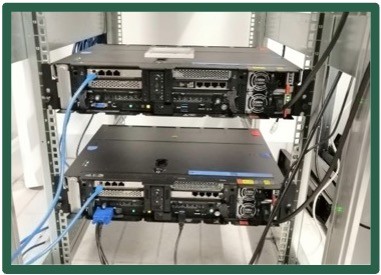
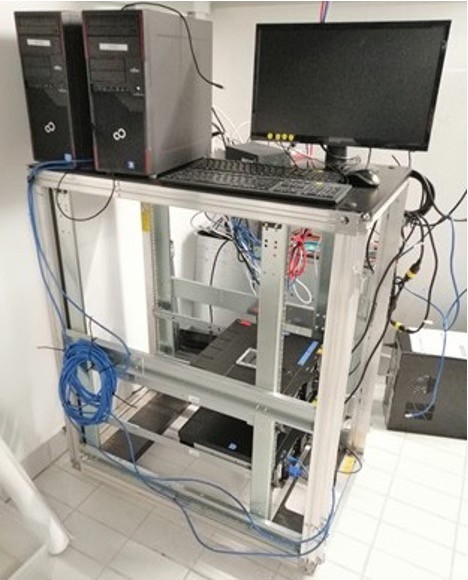
The Institute for Energy Economics and the Rational Use of Energy (IER) and the Institute for Architecture of Application Systems (IAAS) at the University of Stuttgart jointly developed a Databox and installed it in the IER server room. The Databox collects metrics from the physical infrastructure — power consumption, temperature, and humidity — and transmits them to the NADIKI Registrar. The first functional test on a laboratory scale was successful.
The Databox addresses a central issue of the Observer Architecture: How can measurement data from existing data center infrastructure be converted into a standardized format for the Registrar? Robin Pesl and Dinesh Vemula from IAAS conceptualized and built the Databox architecture. The IER provided the laboratory with Lenovo Edge servers and full infrastructure (cooling, UPS) as a test environment.