Lebenszyklusanalyse
Why are LCA’s relevant to the digital infrastructure industry?
Life Cycle Assessments are widely adopted in the sustainability realm. For many sectors, from construction to agriculture and energy, this is already in use. However, it has yet to be applied in the digital infrastructure industry. Therefore, efforts to make this industry more sustainable are challenging: we lack the data we need to improve.
Using methodologies like LCA can provide valuable insights into the environmental impact of products and services. We believe measuring is knowing: the data in an LCA provides us with what we need to report our environmental impact and enhance our products, services, and businesses.
LCA also facilitates comparisons between different products and services and can, for example, help select the most sustainable option. Although it is a complex methodology, we believe it is particularly suited to the digital infrastructure sector due to its complexity. It can cover multiple aspects of the value chain. Standards exist that define an LCA and its requirements. A part of this is a review process, where an independent party reviews the results (see more about the relationship to standardization and labeling below).
“LCA can support the pathway to a more environmentally sustainable digital transformation by identifying environmental hotspots of ICT, recognizing environmental trade-offs, monitoring the environmental impacts of the digital transformation, and demonstrating the sustainability potential of substituting digital for non-digital technologies with high environmental impacts.” (Itten et al., 2020)
Why are LCA’s relevant to the digital infrastructure industry?
Life Cycle Assessments are widely adopted in the sustainability realm. For many sectors, from construction to agriculture and energy, this is already in use. However, it has yet to be applied in the digital infrastructure industry. Therefore, efforts to make this industry more sustainable are challenging: we lack the data we need to improve.
Using methodologies like LCA can provide valuable insights into the environmental impact of products and services. We believe measuring is knowing: the data in an LCA provides us with what we need to report our environmental impact and enhance our products, services, and businesses.
LCA also facilitates comparisons between different products and services and can, for example, help select the most sustainable option. Although it is a complex methodology, we believe it is particularly suited to the digital infrastructure sector due to its complexity. It can cover multiple aspects of the value chain. Standards exist that define an LCA and its requirements. A part of this is a review process, where an independent party reviews the results (see more about the relationship to standardization and labeling below).
“LCA can support the pathway to a more environmentally sustainable digital transformation by identifying environmental hotspots of ICT, recognizing environmental trade-offs, monitoring the environmental impacts of the digital transformation, and demonstrating the sustainability potential of substituting digital for non-digital technologies with high environmental impacts.” (Itten et al., 2020)
Types of Life Cycle Assessments
Attributional LCA: Determines what share of global environmental burdens is attributable to the product or service.
Consequential LCA: Assesses the impact of the product on global environmental burdens.
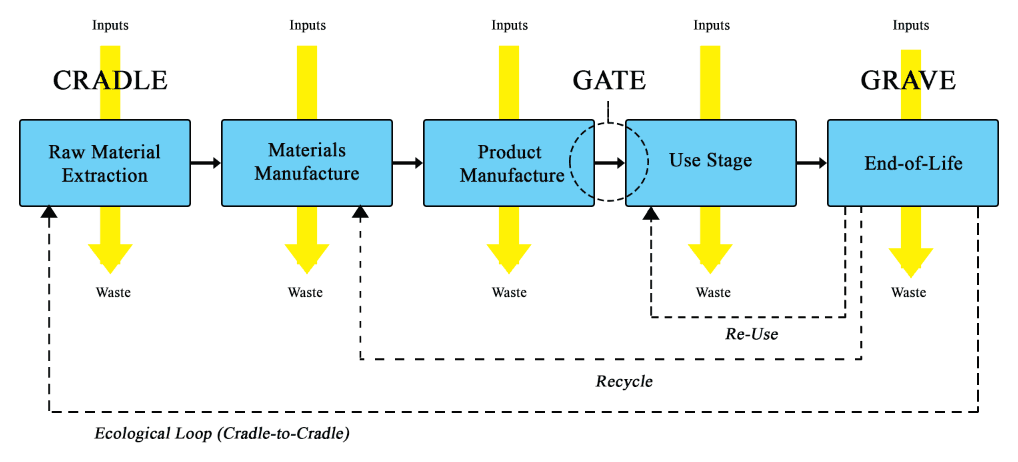
Stages of Life Cycle Assessment
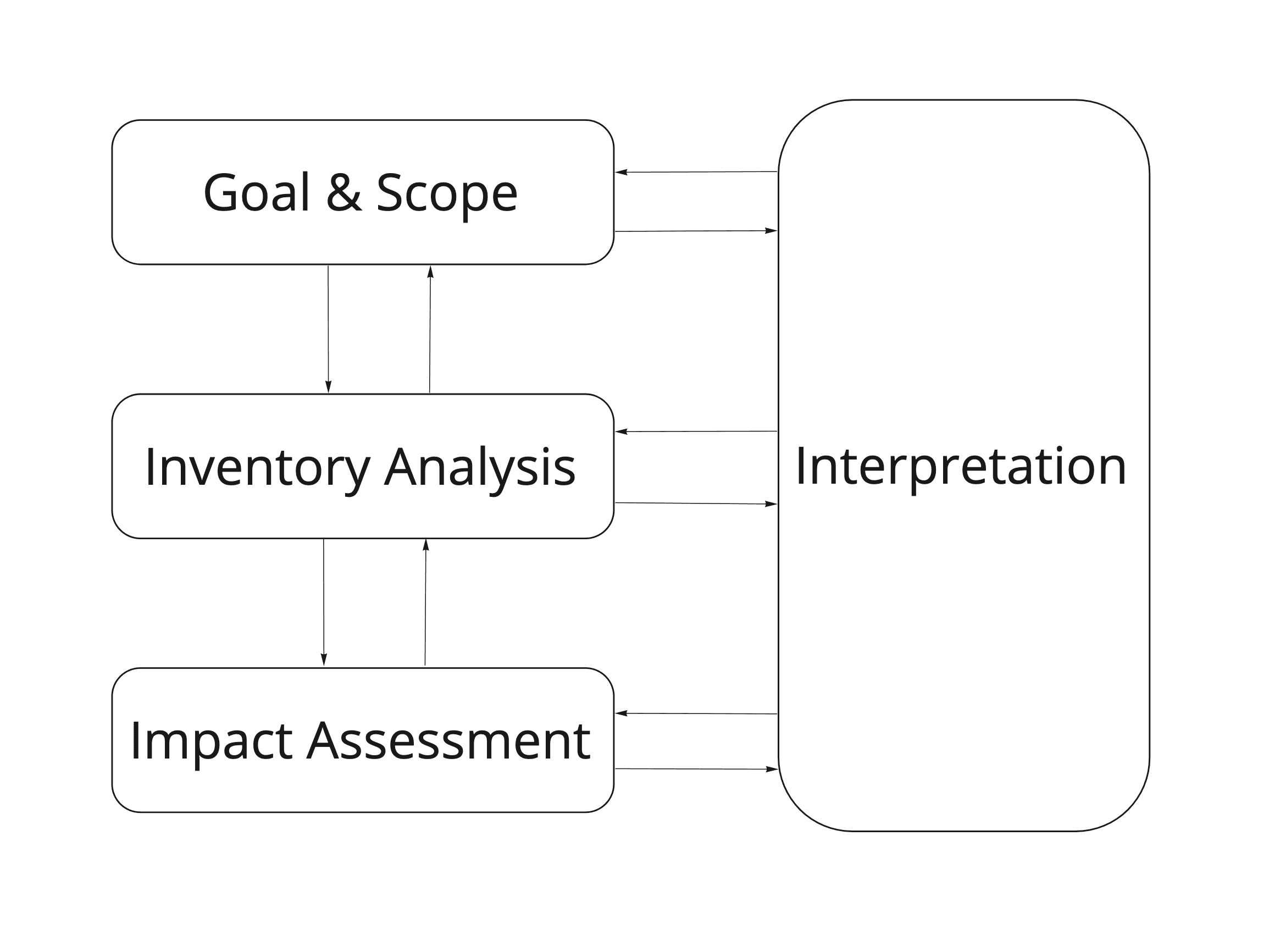
There are four stages in conducting a Life Cycle Assessment:
Defining the goal and scope
Creating a Life Cycle Inventory
Collecting all data, for instance, using existing databases such as Ecoinvent
Conducting Life Cycle Impact Assessment
This can be based on resources or emissions. There are various methods for impact assessment; it is important to select the right one for your audience.
Interpreting the results
LCA Framework
Sustainability Reporting
LCA makes it easier to report on ESG efforts. With lifecycle data, you can report to frameworks and standards like the Greenhouse Gas Protocol, Science Based Targets initiative, and the Global Reporting Initiative.
Greenhouse Gas Protocol (GHG Protocol)
The GHG Protocol creates comprehensive global standardized frameworks for measuring and managing greenhouse gas (GHG) emissions from operations, value chains, and mitigation efforts in the public and private sectors. Building on a 20-year partnership between the World Resources Institute (WRI) and the World Business Council for Sustainable Development (WBCSD), it works with governments, industry associations, NGOs, businesses, and other organizations.
Science-based targets provide a delineated path for companies to reduce greenhouse gas (GHG) emissions, aiding the prevention of severe climate change impacts and securing sustainable business growth. Targets are deemed ‘science-based’ if they align with the latest climate science necessary to meet the goals of the Paris Agreement – restricting global warming to well-below 2°C above pre-industrial levels and striving to limit it to 1.5°C.
The GRI Standards enable any organization – large or small, private or public – to transparently understand and report their impacts on the economy, environment, and people in a comparable and credible manner, thus enhancing transparency in their contribution to sustainable development. Besides reporting companies, the Standards are significant for numerous stakeholders, including investors, policymakers, capital markets, and civil society. The Standards are constructed as an easy-to-use modular set, offering an inclusive picture of an organization's material topics, related impacts, and management.
International Organization for Standardization
ISO is an independent, non-governmental international body with 167 national standards organizations as members. It unites experts to exchange knowledge and develop voluntary, consensus-based, market-relevant international standards that promote innovation and offer solutions to global challenges.
Types of Life Cycle Assessments
Attributional LCA: Determines what share of global environmental burdens is attributable to the product or service.
Consequential LCA: Assesses the impact of the product on global environmental burdens.
Stages of Life Cycle Assessment
There are four stages in conducting a Life Cycle Assessment:
Defining the goal and scope
Creating a Life Cycle Inventory
Collecting all data, for instance, using existing databases such as Ecoinvent
Conducting Life Cycle Impact Assessment
This can be based on resources or emissions. There are various methods for impact assessment; it is important to select the right one for your audience.
Interpreting the results
LCA Framework
Sustainability Reporting
LCA makes it easier to report on ESG efforts. With lifecycle data, you can report to frameworks and standards like the Greenhouse Gas Protocol, Science Based Targets initiative, and the Global Reporting Initiative.
Greenhouse Gas Protocol (GHG Protocol)
The GHG Protocol creates comprehensive global standardized frameworks for measuring and managing greenhouse gas (GHG) emissions from operations, value chains, and mitigation efforts in the public and private sectors. Building on a 20-year partnership between the World Resources Institute (WRI) and the World Business Council for Sustainable Development (WBCSD), it works with governments, industry associations, NGOs, businesses, and other organizations.
Science-based targets provide a delineated path for companies to reduce greenhouse gas (GHG) emissions, aiding the prevention of severe climate change impacts and securing sustainable business growth. Targets are deemed ‘science-based’ if they align with the latest climate science necessary to meet the goals of the Paris Agreement – restricting global warming to well-below 2°C above pre-industrial levels and striving to limit it to 1.5°C.
The GRI Standards enable any organization – large or small, private or public – to transparently understand and report their impacts on the economy, environment, and people in a comparable and credible manner, thus enhancing transparency in their contribution to sustainable development. Besides reporting companies, the Standards are significant for numerous stakeholders, including investors, policymakers, capital markets, and civil society. The Standards are constructed as an easy-to-use modular set, offering an inclusive picture of an organization's material topics, related impacts, and management.
International Organization for Standardization
ISO is an independent, non-governmental international body with 167 national standards organizations as members. It unites experts to exchange knowledge and develop voluntary, consensus-based, market-relevant international standards that promote innovation and offer solutions to global challenges.