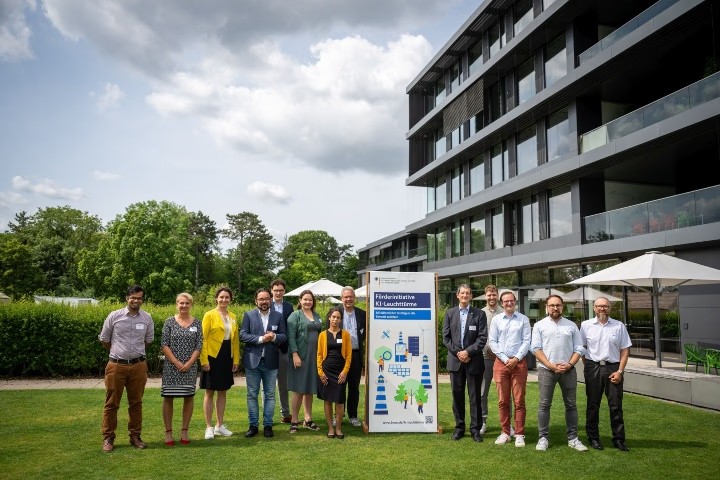
The Paderborn Center for Parallel Computing has connected its supercomputer infrastructure to the NADIKI Registrar. GPU- and FPGA-based high-performance servers provide measurement data for SIEC research.
In July 2025, the University of Paderborn connected its supercomputer infrastructure to the NADIKI Registrar. Through the Paderborn Center for Parallel Computing (PC2), measurement data from high-performance servers with GPUs and FPGAs are integrated into the system—an important contribution to our research project 'SIEC', which we are conducting on behalf of the Federal Environment Agency. This expands the data base in the registrar to include a class of devices that have so far been scarcely recorded in energy efficiency measurements.
The University of Paderborn operates one of the most powerful computing infrastructures in Germany with Noctua 2 and its successor system Otus, starting in fall 2025. The systems include over 140,000 processor cores, more than 100 GPUs, and specialized FPGA accelerators. The location is part of the NHR alliance of nine national high-performance computing centers, relies on 100% renewable energy, and uses hot water cooling with waste heat recovery.
Why HPC Data is Important for SIEC
The SIEC metric measures the unnecessary energy consumption of underutilized servers. Previous measurements focused on traditional data center servers. With the data from Paderborn, systems with fundamentally different load profiles using GPUs and FPGAs are included for the first time—raising the question of whether the existing methodology is sustainable for high-performance computers.
"We are pleased that more data centers are willing to support our research with real operational data and thank the University of Paderborn and the PC2 team. HPC measurement data is particularly valuable for validating the SIEC metric because it covers a class of devices that is missing from previous research."
— Max Schulze, IDED